Metal posts vs. wood posts: what should hold up your cedar fence?
On this page · 8 sections
When people call us about a new cedar fence, the conversation almost always starts with the boards: what style, how tall, picket or board-on-board, lattice on top or not. Those are good questions. But the part of a wood fence that decides whether it stands straight for years or starts leaning after a few winters is the part you barely see once the job is done: the posts.
Wood posts and metal posts can both hold up a cedar fence. They don't hold up the same way, and they don't age the same way. Here's how we explain the difference during an estimate, and why it's one of the first questions we'd ask any contractor you're considering.
The short answer
Bottom Line Up Front
For a cedar fence you want standing straight for the long haul, use metal posts. Wood posts can work for a short-term or low-stakes fence, but they're the first thing to rot and bend, and the boards are only as straight as what holds them up.
Metal posts keep wood out of the soil, where moisture does the most damage, and they resist the bending that pulls a fence out of line. They can cost a little more up front. We think that's worth it, and we'll show you the materials so you can judge for yourself.
Why the posts matter more than the boards
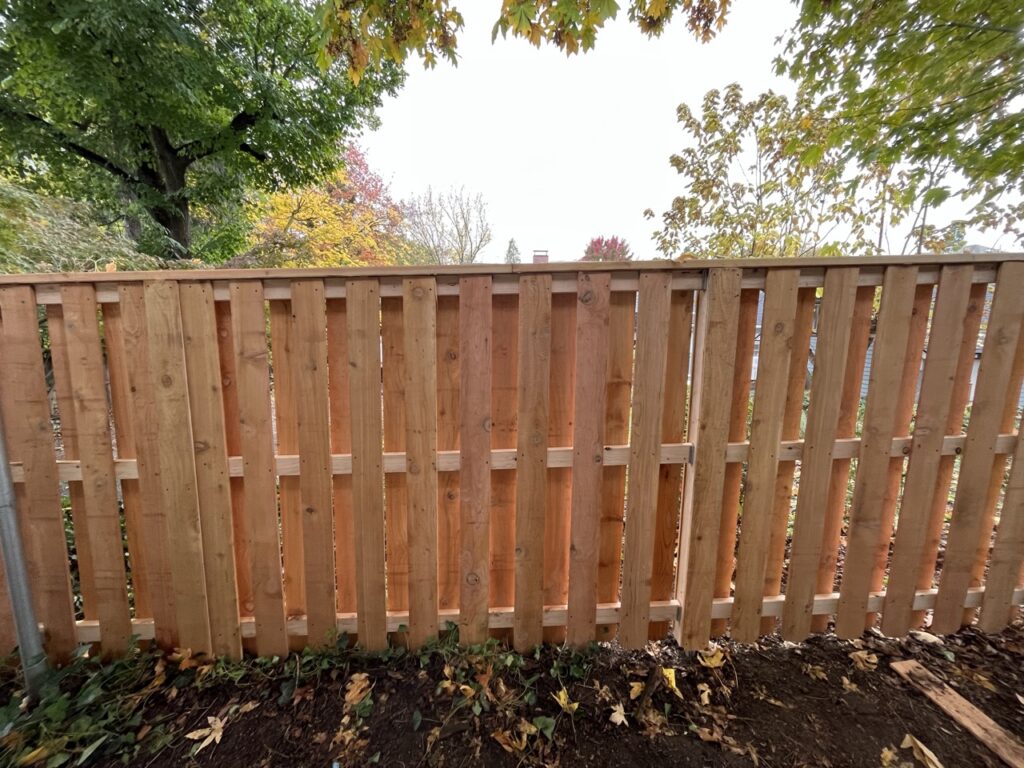
Every board, rail, and gate on a fence hangs off the posts. The boards are above ground, where they can dry out between storms. The posts are not. A wood post spends its whole life with one end buried, sitting in soil that gets wet, dries, freezes, and thaws over and over. The spot where the post meets the ground is where moisture lingers longest, and that's usually where wood starts to break down first.
When a post softens or bends at the ground line, the fence doesn't fail all at once. It leans a little, a gate stops latching, a rail pulls loose. By the time it's obvious from the street, the problem has usually spread to the posts on either side. We covered more of this in why fences fail in Central Oregon.
Wood posts vs. metal posts at a glance
This is the comparison we'd sketch out on a clipboard in your yard. Each row is something a homeowner actually weighs; the highlighted cell is the post type that usually comes out ahead on that point.
| Factor | Wood Posts | Metal Posts |
|---|---|---|
| What sits in the ground | Wood, in direct soil contact | Metal, with no wood buried |
| Rot at the ground line | The most common failure point | Not a concern |
| Bending and lean | Can warp and lean over time | Resists bending |
| Gates staying in line | Sag as posts soften | Hold their position |
| Replacing boards later | Depends on post condition | Solid posts to reattach to |
| Upfront materials cost | Usually lower | Can cost a little more |
| Long-term structure | Posts may need resetting | Built to stay put |
Before you hire anyone, ask what posts they plan to use and where they buy their materials. A lot of contractors won't want to answer that. A good one will tell you exactly what's going in the ground and why, and won't mind if you write it down.
Is your current fence telling you something?
If you already have a wood fence on wood posts, you can check how the posts are doing without digging anything up. Walk the line, push gently on a few posts, and look closely where they meet the ground.
Signs your posts are holding up
The structure is sound. Focus on the boards and routine care.
What to look for
- The fence line looks straight when you sight down it from one end.
- Posts feel solid when you push on them, with no rocking or give.
- The wood at the ground line is firm and doesn't dent with a screwdriver.
- Gates swing freely and latch without lifting or forcing.
Signs your posts are failing
The problem is below the boards. Fixing the fence means fixing what holds it up.
What changes the answer
- Sections of the fence lean, or the top line dips and waves.
- Posts wobble or move when you push on them.
- The wood at the base is soft, dark, crumbling, or pulling away from the soil.
- A gate drags, sags, or won't latch the way it used to.
What about the cost?
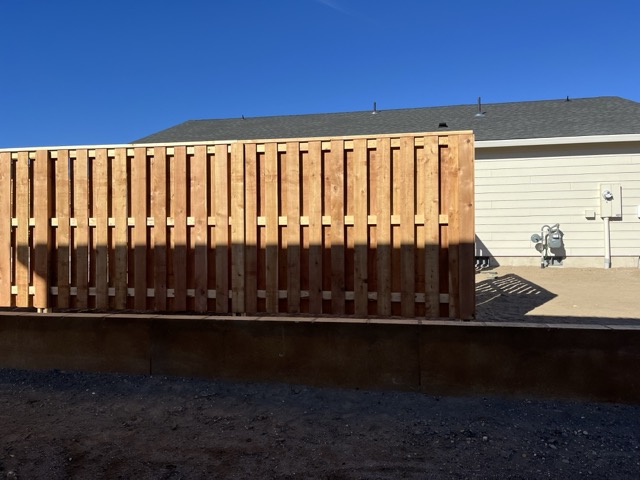
We'll be straight with you: a better product can cost a little more up front. We show people the materials we use, explain the difference, and let them decide. What we've found is that most homeowners would rather pay once for a fence that lasts than pay again in a few years to reset posts that rotted or bent.
Every job is different, so we don't publish a one-size price. After we look at the property, we put together a written estimate and email it to you, usually within two to three business days. If you go ahead, the contract spells out what we're building, the price per foot, and the estimated total before any work starts.
“People pay good money for fences. We'd rather build it right the first time so you never have to build it again.”— Cascade Fencing
If you ask why they use the posts they use and get a vague answer, or a lot of baloney, that's a sign to call someone else. A knowledgeable contractor should explain the materials, the install, and the long-term care of a wood fence without you having to drag it out of them.
Don't forget the upkeep
Metal posts take a lot of the worry out of the structure, but a wood fence is still a lifetime of maintenance. The cedar boards will weather, and how you care for them decides how good the fence looks over time. Any contractor building you a wood fence should walk you through aftercare. If they don't bring it up, ask. You can read more about why we like the material in why cedar is ideal for residential fencing.

The decision matrix
Find the rows that fit your situation. Most yards fit more than one, so go with the column that wins the most of your rows.
| If your fence… | Wood Posts | Metal Posts |
|---|---|---|
| Needs to last for many years | With upkeep | Yes |
| Is a tall privacy fence that catches wind | Can lean | Yes |
| Has a gate you use every day | Sag risk | Yes |
| Sits in ground that stays wet | Rot risk | Yes |
| Is a short-term or temporary fence | Fine | More than needed |
| Has the lowest possible upfront budget | Usually | A little more |
The bottom line
For most cedar fences we build around Prineville, Redmond, Bend, and the rest of Central Oregon, metal posts are the better foundation. They keep the wood out of the ground, they resist bending, and they give the boards a straight, solid line to hang on for years. Wood posts can still make sense for a short-term or low-stakes fence, as long as you go in knowing how they age.
If you're not sure what's right for your property, that's what the estimate is for. It's free, we'll talk through the options, and you'll know exactly what's going in the ground before anything gets built. If you're still comparing companies, our guide on how to choose the right fencing contractor lists the other questions worth asking.