Predator-Proof Fencing Protecting Your Animals From Coyotes, Cougars & More
A Central Oregon guide to choosing the right predator fencing—what works, what doesn't, and how to keep your livestock and poultry safe.
Request a Free EstimateWhy Predator Fencing Matters in Central Oregon
If you raise livestock, poultry, or other animals in Central Oregon, predator threats are a fact of life. Coyotes, cougars, bears, and birds of prey can devastate a flock or herd in a single night. Standard agricultural fencing is designed to keep animals in—but keeping predators out requires a completely different approach.
In this guide, we break down the most common predator threats across Crook and Deschutes counties, explain what makes predator fencing different from standard fencing, and walk through the design features that actually work. Whether you're dealing with coyotes digging under your fence line or cougars jumping over it, understanding your options is the first step toward protecting your animals.
Request a Free Estimate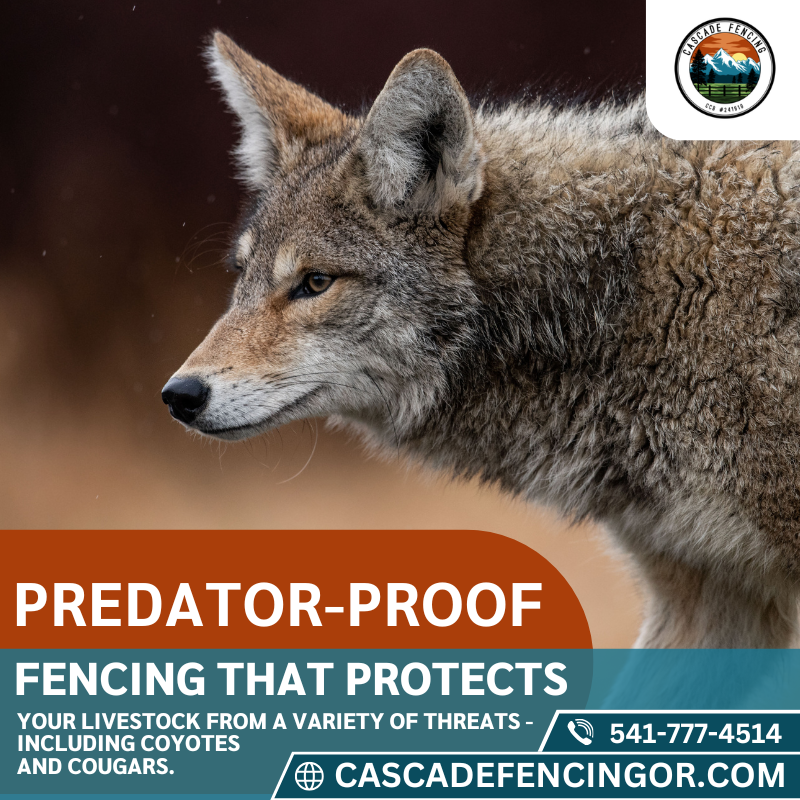
What to Look for in a Predator Fence Contractor
Not every fence contractor understands predator behavior or knows how to build fencing that actually stops wildlife threats. When evaluating a contractor for predator fencing, these are the things that matter most—and what we bring to every project at Cascade Fencing.
- Local knowledge of the area's wildlife and terrain
- Custom designs based on specific predator threats, not generic templates
- Materials rated for the job—not the cheapest option off the shelf
- Transparent, itemized estimates so you understand what you're paying for
- Proven experience with agricultural and rural fencing projects
How a Predator Fence Project Comes Together
Initial Consultation
We discuss your property, the animals you're protecting, and the predator threats you're facing to understand your needs.
Property Assessment
We visit your property to evaluate terrain, existing fencing, vulnerable areas, and identify the best fencing strategy.
Custom Design
We design a predator fence tailored to your land—selecting materials, heights, and reinforcement methods specific to your threats.
Detailed Estimate
You receive a clear, transparent estimate outlining every cost. No hidden fees, no surprises—just honest pricing.
Expert Installation
Our experienced crew builds your predator fence with precision, using top-quality materials and proven construction techniques.
Final Walkthrough
We walk the fence line with you to ensure everything meets your expectations and your animals are fully protected.
Predator Fencing by Threat: What Actually Works
Coyote-Proof Fencing
Coyotes are one of the most persistent predators in Central Oregon, and they're remarkably resourceful. They dig under fences, squeeze through gaps, and can jump surprisingly high. Standard agricultural fencing rarely stops a determined coyote.
Our coyote-proof fencing systems address every angle of attack. We install buried aprons or L-shaped footers along the base to prevent digging, use small-mesh wire at ground level to eliminate squeeze points, and build fences to a minimum height of 5.5 to 6 feet. For properties with heavy coyote pressure, we can add coyote rollers or angled extensions at the top to prevent climbing. Every coyote fence we build is designed around your specific property and the behavior patterns you're dealing with.
Cougar-Proof Fencing
Cougars present a different challenge than coyotes. They're powerful climbers and can clear a standard fence in a single bound. Keeping cougars out requires height, structural reinforcement, and often overhead deterrents that make the fence impossible to scale.
For properties in cougar territory—which includes much of Crook and Deschutes counties—we build fences at a minimum of 8 feet with angled extensions or wire overhangs at the top. The goal is to create a barrier that a cougar cannot jump over, climb, or pull apart. We also reinforce posts and connections to withstand the force of a large predator testing the fence. If you've experienced cougar activity near your property, we can design a system specifically for that level of threat.
Bear-Resistant Fencing
Bears are strong enough to bend, break, or push through fencing that would stop most other predators. A black bear can easily tear apart lightweight wire fencing or push over poorly anchored posts. Bear-resistant fencing needs to be built heavy and anchored deep.
We use heavy-gauge welded wire or reinforced chain link with deeply set posts and robust bracing for bear-prone areas. In some cases, electric fence lines can be added as an outer deterrent to discourage bears from even testing the main fence. We'll assess the bear activity in your area and recommend the right combination of materials and design to keep your animals and property secure.
Aerial Predator Protection
Hawks, eagles, and owls are a serious threat to poultry, small livestock, and young animals. Unlike ground predators, aerial predators attack from above, which means even the best ground-level fence won't protect your animals without overhead coverage.
For poultry runs, small animal enclosures, and lambing areas, we install overhead netting or wire mesh that prevents birds of prey from reaching your animals. We use UV-resistant materials that hold up to Central Oregon's sun and weather, and we design the overhead system to be accessible for daily maintenance and animal care. If full overhead coverage isn't practical for your situation, we can also install deterrent wires and visual barriers that significantly reduce the risk of aerial attacks.
Poultry & Small Animal Fencing
Chickens, ducks, rabbits, and other small animals are the most vulnerable to predator attacks. Their enclosures need to be secure from every direction—underground, ground level, sides, and overhead. A single weak point can result in devastating losses overnight.
We build fully enclosed predator-proof runs and coops using small-mesh hardware cloth (not chicken wire, which predators can tear through), buried aprons to prevent digging, secure latches that raccoons and other clever predators can't open, and overhead netting or wire to stop aerial attacks. Every enclosure is custom-built to fit your property and the number of animals you're housing, with access doors and gates designed for your convenience while maintaining full security.
Livestock & Cattle Fencing
Protecting cattle, horses, sheep, goats, and other livestock from predators requires fencing that covers large areas while maintaining structural integrity across varied terrain. Standard agricultural fencing keeps livestock in, but predator-proof livestock fencing also needs to keep threats out.
We build predator fencing for large properties using high-tensile wire, woven wire, or heavy-gauge welded panels depending on the predator threats and livestock type. For sheep and goat operations—which are especially vulnerable to coyotes—we use tight-mesh woven wire with buried bases and added height. For cattle operations dealing with cougar threats, we combine traditional agricultural fencing with reinforced perimeter barriers in high-risk zones. Every system is built to handle Central Oregon's terrain and conditions.
Predator Fencing FAQs
Our predator fencing is designed to protect against the most common threats in Central Oregon, including coyotes, cougars (mountain lions), bears, raccoons, foxes, weasels, hawks, eagles, and owls. The specific design depends on which predators are active in your area and what animals you're protecting. During our property assessment, we identify the threats you're facing and build accordingly.
Height depends on the predator. For coyotes, a minimum of 5.5 to 6 feet is recommended, often with angled extensions or rollers at the top. For cougars, fences should be at least 8 feet tall with anti-climb features. We'll recommend the right height for your specific situation during the design phase, based on the predators active on your property.
No. Standard chicken wire is too thin and flimsy to stop most predators. Raccoons, coyotes, and even determined dogs can tear through it. We use heavy-gauge hardware cloth or welded wire mesh for predator-proof enclosures. These materials are significantly stronger and provide a real barrier that predators can't rip, bend, or chew through.
We install buried wire aprons that extend outward from the base of the fence, typically 12 to 24 inches underground or along the ground surface. When a predator tries to dig at the fence line, it hits the buried wire and can't get through. This is one of the most effective and essential features of any predator fence, especially for coyotes and foxes that are persistent diggers.
In many cases, yes. Depending on the condition and type of your existing fence, we can often add height extensions, buried aprons, coyote rollers, reinforced mesh, or overhead netting to upgrade your current fencing into a predator-proof system. During our assessment, we'll evaluate your existing fence and let you know whether upgrading or replacing it makes more sense for your situation and budget.
The cost varies based on the size of the area, the type of predators you're defending against, the materials used, and the terrain of your property. We provide free, detailed estimates with no hidden fees so you know exactly what to expect. Every project is different, and we work with you to find a solution that fits your budget while providing the level of protection your animals need.
Absolutely. While we're headquartered in Prineville, we serve all of Crook and Deschutes counties and surrounding areas, including Bend, Redmond, Madras, Sisters, Culver, Crooked River Ranch, Lapine, Terrebonne, and beyond. Many of our predator fencing projects are on rural and agricultural properties throughout Central Oregon.
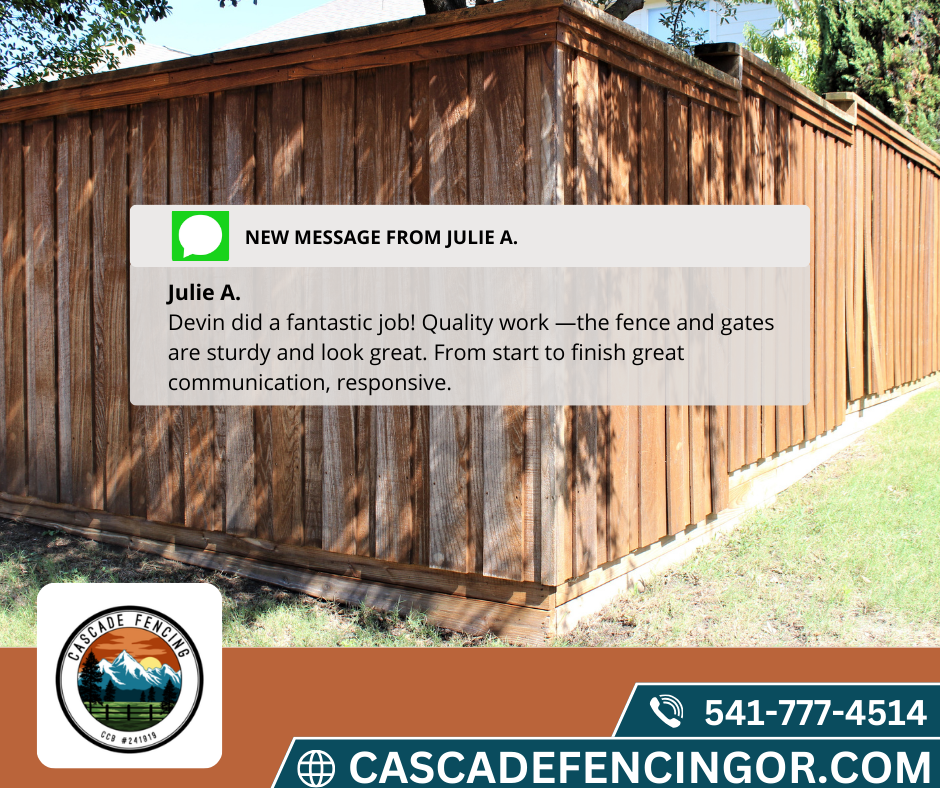
Devin is real easy to talk to and explains the process of building the fence really well. He followed through with the job as promised. He did an excellent job. We are totally satisfied with the fence.
Related Fencing Services
Cedar Fencing
Natural, durable, and stylish cedar fences that add beauty, privacy, and lasting protection to your property.
Learn MoreAgricultural Fencing
Durable and reliable agricultural fencing designed to protect your livestock, crops, and property across Central Oregon.
Learn MoreChain Link Fencing
Affordable, strong chain link fences ideal for securing your property with minimal maintenance required.
Learn MoreCustom Fencing
Custom-built fences tailored to your residential or commercial property's specific needs and preferences.
Learn MoreMobile Livestock Shelters
Durable, portable livestock shelters designed for Central Oregon's climate—easy to move and built to last.
Learn MoreWhat Sets a Quality Predator Fence Apart
Locally Owned & Operated
Based in Prineville, we know Central Oregon's terrain, wildlife, and climate. We're your neighbors, and we take pride in protecting our community's animals.
Predator-Specific Designs
We don't guess—we design fencing based on the specific predator threats in your area, whether it's coyotes, cougars, bears, or birds of prey.
Top-Quality Materials
We use heavy-gauge wire, hardware cloth, reinforced posts, and premium fasteners—materials built to withstand predators and Oregon weather alike.
Transparent Pricing
Every estimate is detailed and upfront. No hidden fees, no surprise charges. The price we quote is the price you pay.
Direct Communication
You work directly with our team from consultation to completion. No call centers, no runaround—just clear, honest communication.
No Mess Left Behind
When we finish a project, we clean up completely. Your property is left looking better than when we started—no debris, no loose materials.